Physical Address
304 North Cardinal St.
Dorchester Center, MA 02124
Physical Address
304 North Cardinal St.
Dorchester Center, MA 02124


Top 7 Mistakes That Kill Infrastructure Project Finance Deals—And How to Avoid Them
By Dr. Santiago Fronda, PhD, PhDD, MBA
Author of The Green Frontier & Renewable Energy Project Management
Introduction: The Fine Line Between Bankable and Broken
If you’re developing a large-scale infrastructure, renewable energy, or climate-aligned project, knowing what not to do can be just as valuable as knowing what to do. In project finance, failure rarely happens overnight. Deals don’t collapse because of one bad decision—they unravel through a series of overlooked mistakes that erode investor trust and derail financial close.
Having spent more than two decades structuring and advising on multi-billion-dollar energy, infrastructure, and green fuel projects, I’ve seen the same fatal flaws repeatedly. These missteps—often buried in feasibility studies, financial models, or stakeholder assumptions—can quietly kill the bankability of even the most promising project.
In this post, I’ll walk you through the seven most common mistakes that kill project finance deals—and how to avoid them with execution discipline, strategic foresight, and investor alignment.
In project finance, ambiguity is the enemy of bankability. Lenders, ECAs, and institutional investors do not finance ideas—they finance structured realities. When your project scope is loosely defined or constantly evolving—be it unclear technology platforms, shifting capacity targets, ambiguous site locations, or undefined offtake arrangements—you undermine the credibility of your entire proposal.
A weak scope introduces cascading uncertainty into your financial model, technical feasibility, permitting pathway, and EPC structuring. It signals immaturity to investors and often triggers red flags during lender due diligence. Ultimately, if your scope doesn’t translate into quantifiable outputs and execution-ready milestones, the project loses traction before it even enters the credit committee room.
A robust project scope is not just a list—it’s a bankability blueprint. To secure early-stage investor confidence and pave the way for successful financial structuring:
“Investors don’t just fund a project—they fund clarity, discipline, and deliverability. A well-defined scope is the first proof of your project’s credibility.”
— Dr. Santiago Fronda, PhD, Author of The Green Frontier
In project finance, feasibility is not optional—it is the foundation of trust. Without comprehensive, investor-grade feasibility studies, your project cannot survive the rigors of technical, financial, and ESG due diligence. Internal projections, marketing decks, or assumptions are not enough.
Lenders and institutional investors are under strict mandate to verify that a project is viable, executable, and sustainable. Weak or incomplete feasibility studies trigger immediate skepticism and can derail capital mobilization efforts. When feasibility lacks depth, credibility suffers—and capital walks.
To ensure project bankability, commission comprehensive, third-party feasibility studies that withstand scrutiny across all due diligence fronts:
“Feasibility isn’t just a box to tick—it’s your credibility on paper. A project that’s not technically, commercially, and socially feasible is not bankable—no matter how green or visionary.”
— Dr. Santiago Fronda, PhD | Author, The Green Frontier
Use your feasibility findings to inform your Information Memorandum, PIM, and lender presentations. Ensure alignment between feasibility outputs and the project’s risk allocation, financial model, and ESG strategy.
In project finance, misallocated risk is a deal-breaker. When developers assign construction risk to equity investors or push unhedged market risk onto lenders, it signals a fundamental misunderstanding of how project risks must be managed to achieve bankability.
Bankable projects work because they follow a core principle: risk must be allocated to the party best positioned to control or mitigate it. Misalignment—whether due to flawed contract structuring or inexperience—creates uncertainty, drives up cost of capital, and erodes lender confidence.
Structure your project around proven delivery and risk transfer frameworks such as PPP, BOT, DBFO, and EPC contracting. Key strategies include:
“In project finance, success is engineered—not left to luck. Smart risk allocation doesn’t just protect stakeholders—it creates alignment, accountability, and investability.”
— Dr. Santiago Fronda, PhD | Project Finance Strategist
Financial models are not just spreadsheets—they are blueprints of bankability. If your model is overly optimistic, lacks transparency, or ignores downside scenarios, investors will assume the worst: either your team lacks sophistication, or you’re hiding risk.
Models that overinflate revenues, understate CAPEX/OPEX, or ignore currency volatility can collapse during lender review. And when your DSCR or IRR figures are based on fragile assumptions, your project’s credibility—and access to capital—disintegrates.
Build financial models that are conservative, transparent, and audit-ready, incorporating:
“A financial model is your project’s financial DNA. Lenders want proof of discipline, not dreams. They invest in credibility, not creativity.”
— Dr. Santiago Fronda, MBA, PhD
A project without revenue certainty is a project without repayment capacity. No matter how advanced your design or how green your technology, if you lack signed Power Purchase Agreements (PPA), fuel supply contracts, or tariff clarity—your project is unbankable.
Investors want to know: Who’s paying, how much, for how long, and under what terms? Any ambiguity around revenue streams creates unacceptable risk for lenders and sponsors alike.
Demonstrate clear and committed revenue streams through:
“No revenue, no repayment. Period. A project’s value is in its ability to generate stable, predictable cash flows—and that starts with locked-in offtake.”
— Dr. Santiago Fronda, Author, The Green Frontier
In the era of sustainable finance, ESG is no longer optional—it’s non-negotiable. Lenders, especially DFIs, ECAs, and climate-aligned investors, will not back projects that don’t demonstrate ESG alignment, community engagement, and regulatory compliance from day one.
Failing to integrate ESG early exposes your project to reputational risk, delays in permitting, and outright financing rejection during environmental and social due diligence.
Build ESG into the fabric of your project from pre-feasibility to financial close:
“Sustainability isn’t a buzzword—it’s a license to operate. If you ignore ESG, you’re not just risking investor capital—you’re risking your entire project’s future.”
— Dr. Santiago Fronda, ESG Finance Leader
A project can be technically flawless and financially sound—but still fail due to poor stakeholder management. Local opposition, political resistance, or uncoordinated engagement can delay permits, block land access, or even result in project cancellation.
Stakeholders—from local communities and regulators to ministries and utilities—are not passive observers. They are gatekeepers. And if they are not brought in early and managed effectively, your project is vulnerable to social and political risk.
Embed stakeholder engagement as a strategic pillar—not an afterthought:
“Projects don’t fail in the boardroom—they fail in the field. Stakeholder trust is the quiet engine behind every successful infrastructure deal.”
— Dr. Santiago Fronda, Strategic Finance Consultant
In the world of infrastructure and renewable energy, bankability is not a label—it’s a discipline. It is the outcome of deliberate structuring, credible validation, and stakeholder alignment across every phase of the project lifecycle.
Project finance is more than a numbers game. It is about de-risking—layer by layer—technical feasibility, financial resilience, regulatory compliance, contractual robustness, and social license. Projects that succeed at financial close don’t just look good on paper—they prove they can perform in the real world.
Avoiding these seven critical mistakes isn’t just about surviving due diligence—it’s about unlocking the capital, credibility, and confidence to scale your vision into a viable, investable reality.
Subscribe to The Green Frontier Blog—your strategic hub for:
Join a growing community of developers, finance leaders, and policy shapers who are financing the future—wisely, boldly, and sustainably.
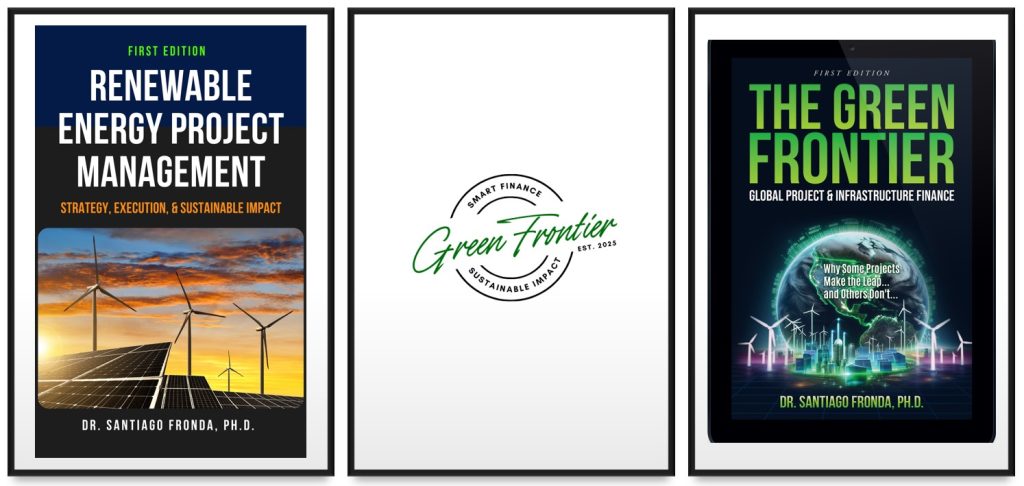
If you found this article helpful, explore Dr. Santiago Fronda’s globally recognized books:
📘 The Green Frontier: Global Project & Infrastructure Finance
A comprehensive playbook for sustainable finance, capital structuring, and green investment strategies.
📗 Renewable Energy Project Management: Strategy, Execution, and Sustainable Impact
A practical guide on leading complex renewable energy projects from concept to commissioning.
Both titles are globally available in digital format. 👉 Visit the Bookstore and Download Your Copy
Empower yourself with the tools trusted by project developers, financial institutions, and infrastructure leaders worldwide.
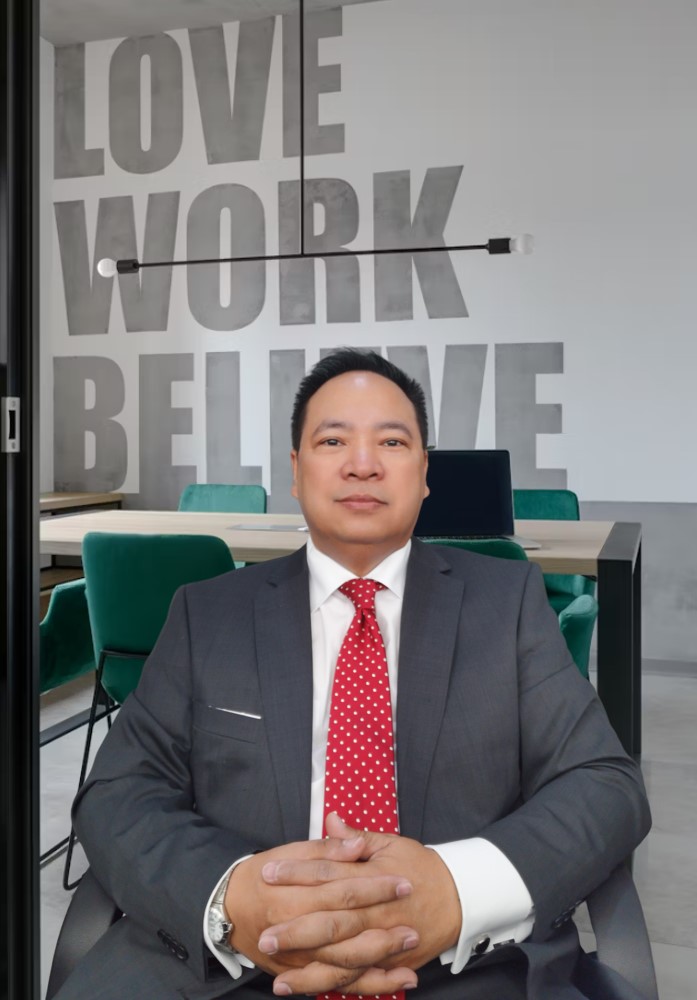
✍️ About the Author
Dr. Santiago Fronda, PhD is a global authority in project & infrastructure finance with over 20 years of leadership in structuring, financing, and executing multi-billion-dollar energy and sustainable infrastructure projects across MENA, APAC, and Australia.
As the author of The Green Frontier: Global Project & Infrastructure Finance and Renewable Energy Project Management, Dr. Santiago empowers developers, investors, and policymakers with real-world strategies that bridge vision with viability. He is the Founder & CEO of NEOX Development Services Group, where he leads initiatives in green ammonia, hydrogen, and advanced biofuels, helping turn climate ambition into bankable outcomes.
A seasoned advisor, educator, and strategist, Dr. Santiago is known for transforming complex financial, regulatory, and ESG challenges into actionable pathways to Final Investment Decision (FID) and Financial Close (FC). His thought leadership fuels The Green Frontier Blog, a trusted resource for sustainable capital, risk mitigation, and infrastructure execution in the global clean energy transition.
📚 Follow his work to stay ahead of the curve in sustainable infrastructure, capital readiness, and project development excellence.

Dr. Santiago Fronda, Ph.D., MBA, is a global leader in project and infrastructure finance, with over two decades of experience structuring multi-billion-dollar clean energy and sustainable infrastructure projects. As the author of The Green Frontier and Renewable Energy Project Management, and CEO of NEOX Development Services Group, Dr. Santiago helps developers, governments, and investors turn climate ambition into bankable projects.