Physical Address
304 North Cardinal St.
Dorchester Center, MA 02124
Physical Address
304 North Cardinal St.
Dorchester Center, MA 02124


By Dr. Santiago Fronda, Ph.D., MBA
Founder, NEOX Development Services Group
Author of The Green Frontier & Renewable Energy Project Management
In the world of infrastructure and clean energy, Capital is abundant—but truly bankable projects are rare. Many developers lose investor interest not because their ideas lack merit but because their presentations focus on what’s being built rather than how returns will be delivered.
After more than 15 years in global infrastructure and renewable energy finance, I’ve witnessed a consistent truth: Capital doesn’t chase ambition—it follows structured execution.
Have you ever watched investors silently check out slide three of your project timeline? I have. And here’s the hard truth: investors aren’t captivated by your methodologies—they’re focused on outcomes. They want to know how, when, and why value will be realized.
The project development lifecycle isn’t just a tool for planning—it’s your credibility narrative. It tells the story of de-risking, discipline, and deliverability, and investors read that story differently than developers do.
In this blog, I’ll reframe the project lifecycle through the lens that matters most to funders—highlighting the five phases, investors truly assess and the execution signals they look for long before they sign a term sheet.
Because, in the end, investors don’t buy ideas—they buy confidence in your ability to deliver.
Understanding the Project Development Lifecycle
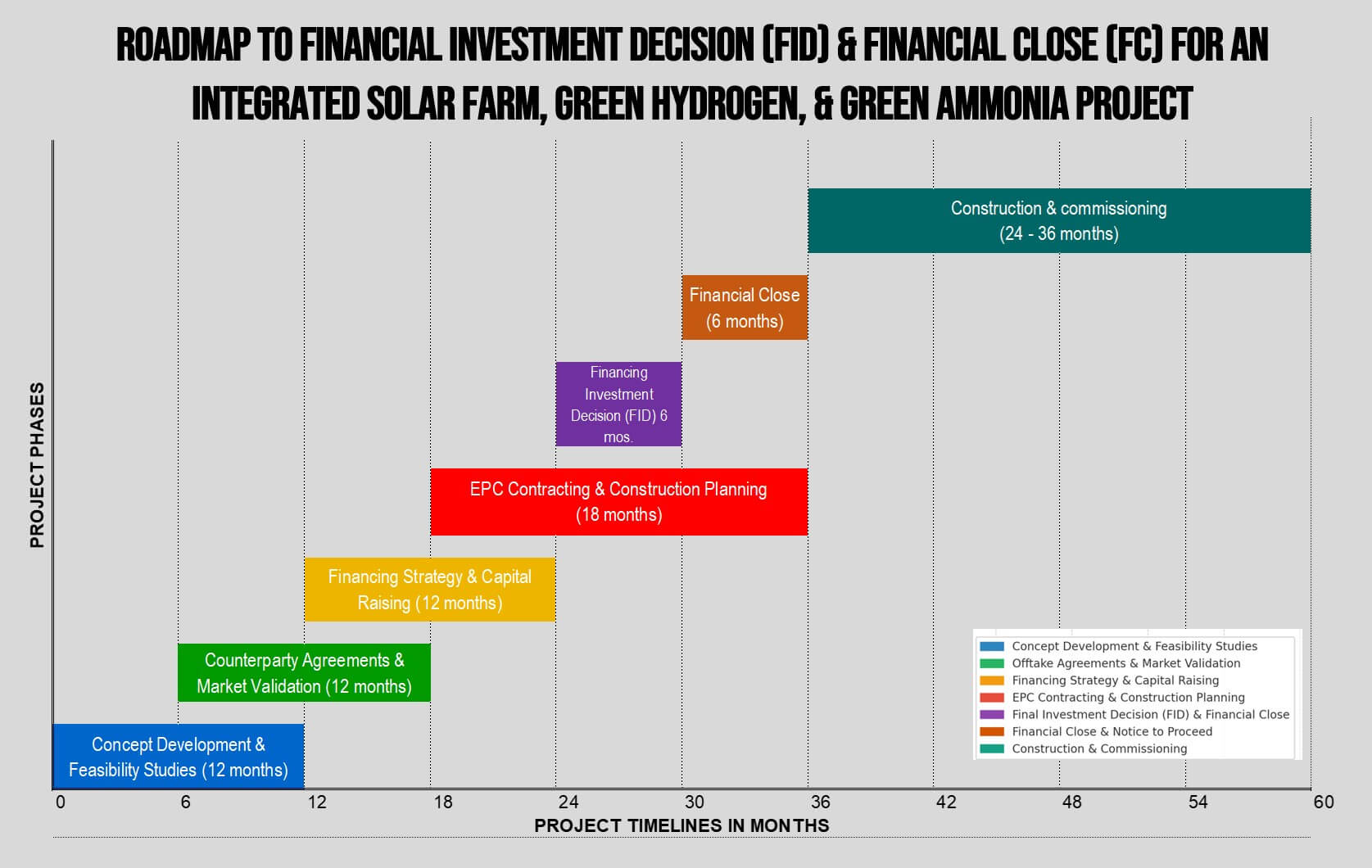
In real-world project finance, a timeline means little if it doesn’t reflect maturity. Investors aren’t just reviewing your Gantt charts—they’re assessing your judgment. They want to know how you handle risk, make decisions, and deliver results at every stage.
Let’s walk through the lifecycle—not from a textbook view, but from the perspective of what investors are actually evaluating when you’re in the room.
Stage 1: Ideation & Concept Development
This is where you lay the foundation. You need to make it clear:
Investor View: If the idea is vague or feels disconnected from the market, you lose them early. Clarity is currency.
Stage 2: Planning & Design
Now, you’re moving from vision to execution. At this point, you should:
Investor Thought: “They don’t need everything figured out—but they do need to show me they’ve thought it through.”
Stage 3: Execution & Implementation
This is where most projects either gain investor confidence—or lose it. You need to:
Investor Thought: “If they can build as planned, I’ll consider staying in—or even putting more capital on the table.”
Stage 4: Scaling & Optimization
You’ve proven the concept. Now, it’s time to show the model works at scale. That means:
Investor Thought: “They want serious capital now—so they need to show me they’re ready to operate like an institution.”
Final Reflection
Investors aren’t looking for perfection at any stage. What they’re looking for is awareness, control, and follow-through. You’ll face risk and setbacks—that’s expected. What matters is how you handle them and whether your project evolves with structure and intent.
“Bankability is earned one decision at a time. The lifecycle isn’t just your internal plan—it’s the language you use to show investors you’re ready.”
— Dr. Santiago Fronda
Stage 5: Exit or Recapitalization
What Developers Should Do:
Investor Insight: “Capital follows liquidity. Define the exit, and you define the investment horizon.”
Lifecycle Maturity Dictates Funding Pathways
Every stage of a project’s lifecycle signals a different risk profile—and attracts a distinct class of Capital. Whether you’re developing a green hydrogen hub, a multi-GW solar farm, or an advanced biofuels refinery, understanding which investors are aligned with your current maturity level is essential to securing the right Capital at the right time and with the right expectations.
| Lifecycle Stage | Investor Types | What They Expect to See |
| 1. Ideation & Concept Development | Angel Investors, Founders, Catalytic Capital Providers, Innovation Funds, Climate Seed Grants (e.g., Breakthrough Energy, Mission Innovation) | Compelling problem-solution fitFounding team credibility and sector experienceHigh-level market need, policy trends, and initial concept note |
| 2. Planning & Feasibility | Seed Funds, Early-Stage VCs, Family Offices, Climate Tech Incubators, Bilateral Grant Agencies (e.g., GIZ, AFD) | Preliminary feasibility studies (technical + commercial)Initial permits or land accessExecution roadmap with credible delivery assumptionsStakeholder engagement and early strategic partnerships |
| 3. Execution & Early Implementation | Series A/B Investors, Development Finance Institutions (DFIs), Export Credit Agencies (ECAs), Government Infrastructure Funds | Signed offtake agreements or Letters of IntentEPC contractor engagement and indicative term sheetsUpdated IRR/DSCR models with sensitivity analysisEnvironmental & Social Impact Assessments (ESIA), local licensingEarly-stage CAPEX funding readiness |
| 4. Scaling & Commercial Operations | Private Equity (PE), Infrastructure Funds, Sovereign Wealth Funds (SWFs), ESG Impact Funds, Green Banks | Demonstrated operational performance or pilot successScalable technology or replicable business modelFull compliance with permitting, ESG, and HSE standardsStrong management team with a track record in executionLong-term offtake or supply agreements in place |
| 5. Exit, Monetization, or Recapitalization | Strategic Investors, Industrial Offtakers, Pension Funds, YieldCos, Public Markets (IPOs), Green Bond Investors | Stable and predictable cash flowClear monetization path (M&A, refinancing, IPO, securitization)Institutional-grade governance and financial reportingAudited performance metrics, ESG certifications, and rating reports |
Key Insight: Align Your Capital Strategy to Your Maturity—Not Just Your Need
Investors don’t just fund ideas—they fund readiness. The more bankable your project becomes, the broader and deeper your investor pool. But mismatching your funding strategy (e.g., pitching a DFI at the concept stage or offering mezzanine debt before feasibility) erodes trust.
“Bankability isn’t just a financial state—it’s a signal of maturity, credibility, and strategic alignment.”
— Dr. Santiago Fronda, Ph.D., MBA
In the world of large-scale infrastructure—especially in energy transition projects like solar, hydrogen, and biofuels—speed is often mistaken for progress. But seasoned investors and stakeholders know better: a rushed project is a risky project.
Yes, momentum matters. But without structure, it becomes noise. In infrastructure, moving fast without discipline doesn’t impress—it alarms.
Here’s how I approach pace across the project lifecycle:
At the concept stage, speed is your friend—but only if it’s backed by focus. Your goal here isn’t perfection; it’s clarity. Quickly test assumptions. Talk to real stakeholders. Validate the need you’re solving. Don’t spend six months building a pitch deck before you’ve spoken to an off-taker or regulator.
Key Reminder: Fast feedback beats silent modeling. Don’t overthink—engage early.
This is where speed can become dangerous. Move too fast, and you risk shallow designs, unrealistic assumptions, and compliance blind spots. Move too slow, and you lose momentum—and potentially market timing or early support.
Striking the right balance means staying agile while being thorough:
Planning discipline signals bankability. Investors want to see how you plan to move—not just that you want to move quickly.
Once execution begins—engineering, procurement, and construction—your job is not to sprint but to deliver precisely what was promised. At this stage, milestones become your reputation.
If you rush and miss critical deadlines or blow the budget, it’s hard to regain investor confidence. Build internal systems to track progress, manage risk, and communicate changes clearly.
This is the moment when speed must give way to control. It’s not how fast you build—it’s how predictably.
Growth is exciting. You’ve proven the model, and now bigger players are watching. But scale is not just about doing more—it’s about doing more with consistency.
Before expanding into new markets or doubling capacity:
A sustainable scale is built on readiness—not on ambition. If your foundation isn’t solid, growth becomes exposure.
In infrastructure, the best developers aren’t the fastest—they’re the most intentional. They know when to move fast to capture opportunity—and when to slow down to get it right.
“Speed creates momentum. But structure builds trust. And trust unlocks Capital.”
— Dr. Santiago Fronda
Investors don’t evaluate your project with a checklist—they assess it through layers of risk. Their goal isn’t to avoid all risks (which is impossible)—it’s to determine whether you understand your risks, have accounted for them in your strategy, and have structures in place to mitigate them. Their genuine concern isn’t that risk exists—but that you haven’t seen it coming.
Below is a breakdown of the types of risks investors perceive at each significant stage of the project lifecycle and how they interpret your maturity based on how well you manage them.
At this stage, projects are often driven by vision. However, vision without grounding quickly becomes speculation. Equity Investors want to see that your project developers have done their homework, that you’re solving a real problem with measurable impact, and that you’re not just chasing the latest energy trend.
Common Risk Signals:
Investor Mindset: “Are they building something the market wants—or just something they hope will work?”
Planning is where vision is translated into structure. But here, the danger is often unrealistic expectations dressed up as confidence. For large-scale projects, investors look for feasibility, permits, interconnection, ESG strategy, and alignment with national policy goals.
Common Risk Signals:
Investor Mindset: “Are they serious builders—or are they dressing this up for the pitch?”
This is where projects either gain momentum or stall. Investors aren’t just watching whether you’re building—they’re watching how you manage delivery, communicate progress, and handle the inevitable setbacks. This is especially important for energy infrastructure, where delays or budget overruns can trigger massive cost implications.
Common Risk Signals:
Investor Mindset: “Are they managing this like professionals—or guessing as they go?”
Growth is seductive—but can expose fragility. Investors in large-scale projects want to know if the operation can scale without cracks forming. They look for ESG compliance, operational readiness, and whether the management team has the depth to lead through expansion.
Common Risk Signals:
Investor Mindset: “Can this team scale—and sustain performance under pressure?”
Investors aren’t asking you to eliminate all risk—they know that’s impossible. What they demand is self-awareness. Show them that you’ve:
Pro Tip: Don’t hide the complex parts. Address your risk head-on, and then explain how you’re solving it. Investors will reward your realism—not your spin.
Securing early-stage Capital for infrastructure and clean energy projects is not just about having a bold vision—it’s about demonstrating readiness, credibility, and alignment. Investors are inundated with concepts, but they commit to teams that demonstrate traction, thoughtfulness, and control from the start.
Here’s how to structure early-stage signals that build investor trust and open the door to catalytic and institutional Capital:
A PoC isn’t just about technical validation—it’s about demonstrating market relevance. This means your idea isn’t being developed in a vacuum but in response to real-world needs, policy priorities, and end-user pain points.
Signals of Strength:
Investor Cue: “They’re not guessing—they’re validating through real-world engagement.”
In large-scale infrastructure, the MVP might not be a physical prototype, but it must be a credible demonstration of execution potential. This could be a small pilot, a modular test site, or a jurisdictional proof point.
Signals of Strength:
Investor Cue: “This isn’t a concept anymore—it’s an investable foundation ready to scale.”
C. Professional Documentation: Show You’re Fund-Ready
Investors are acutely sensitive to how information is presented. A chaotic data room signals disorganization, risk, and a lack of stewardship discipline. A well-curated project binder or digital data room, however, immediately positions your team as capital-ready.
Signals of Strength:
Investor Cue: “If they can manage documentation this well, they can manage institutional capital.”
D. Key Pre-Seed Metrics: Show Signals, Not Just Slides
Before extensive checks are written, investors want tangible traction. Even if you’re pre-revenue, there must be evidence that the idea is moving forward strategically and can scale responsibly.
Signals of Strength:
Investor Cue: “They’re measuring what matters—and thinking like long-term infrastructure owners.”
E. Avoidable Red Flags: What Immediately Erodes Investor Trust
No matter how visionary the idea, inevitable mistakes can disqualify a project team almost instantly. These are signs of immaturity, unpreparedness, or hubris—none of which align with risk-managed capital deployment.
Common Red Flags:
Investor Cue: “If I see fluff or deflection now, I’ll see chaos later.”
Co-development is the Currency of Trust
Investors aren’t passive funders—they’re future co-architects. They want to shape the roadmap, contribute to de-risking strategies, and have a seat at the table where key decisions are made. The earlier you involve them—in feasibility, structuring, and stakeholder negotiation—the more aligned and committed they’ll become.
“Let them shape the journey—and they’ll help you fund the destination.”
Treat every investor interaction as a chance to co-create, not just to convince. That mindset unlocks Capital and builds a foundation for shared success.
Closing Insight: Investors Fund Certainty, Not Hype
Whether you’re developing a gigawatt-scale solar farm, a green hydrogen export facility, or a modular biorefinery in emerging markets, one principle is universal:
“Bankability isn’t about eliminating risk. It’s about structuring around it—and communicating that structure with clarity and confidence.”
— Dr. Santiago Fronda, Ph.D., MBA
Your project lifecycle is more than an internal roadmap. It’s your capital-raising compass—a strategic narrative that signals readiness, reliability, and return.
📥 Get the “Investor-Lens Project Toolkit”
A free, practical resource designed to help you:
👉 [Subscribe now on GreenFRONTIER to access the toolkit]
Join the Conversation
What stage is your project in?
What’s been your biggest challenge in earning investor trust?
Let’s share lessons, improve our structure, and build what the world urgently needs—bankable, sustainable infrastructure.

Dr. Santiago Fronda, Ph.D., MBA, is a global leader in project and infrastructure finance, with over two decades of experience structuring multi-billion-dollar clean energy and sustainable infrastructure projects. As the author of The Green Frontier and Renewable Energy Project Management, and CEO of NEOX Development Services Group, Dr. Santiago helps developers, governments, and investors turn climate ambition into bankable projects.